

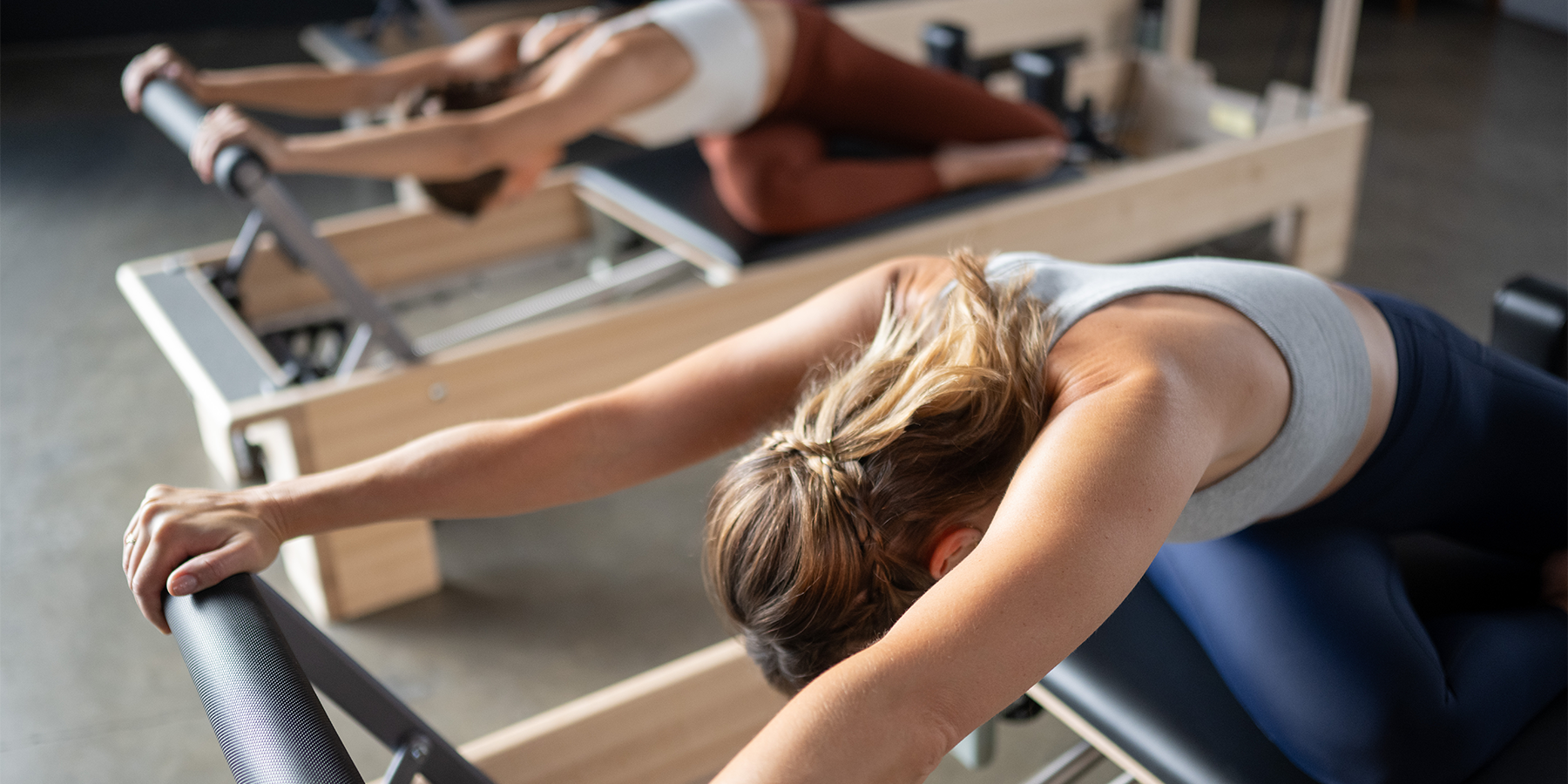
Common beginner mistakes in Pilates
This way, you can avoid the most common pitfalls right from the start.
Pilates is considered a gentle yet highly effective exercise method for improving strength, stability, and body awareness. However, performing the exercises correctly can be a challenge, especially for beginners. Unlike many traditional forms of exercise, Pilates focuses not on the number of repetitions but on the quality of the movement.
Common beginner mistakes can not only reduce the effectiveness of your workout but also lead to muscle tension or improper form. This makes it all the more important to focus on proper form from the very beginning.
Improper breathing – holding your breath instead of letting it flow
One of the most common mistakes in Pilates is improper breathing. Many beginners tend to hold their breath during exercises—usually without realizing it, especially during challenging movements.
Breathing is a central element of the Pilates method. It helps activate the deep core muscles and promotes coordination of movement.
Common mistake:
- Hold your breath during exertion
- Shallow chest breathing without engaging the lateral ribs
Here's how to do it right:
- Maintain calm, steady breathing
- Deliberately expand the side and back ribs (lateral breathing)
- Use exhalation strategically to activate your core muscles
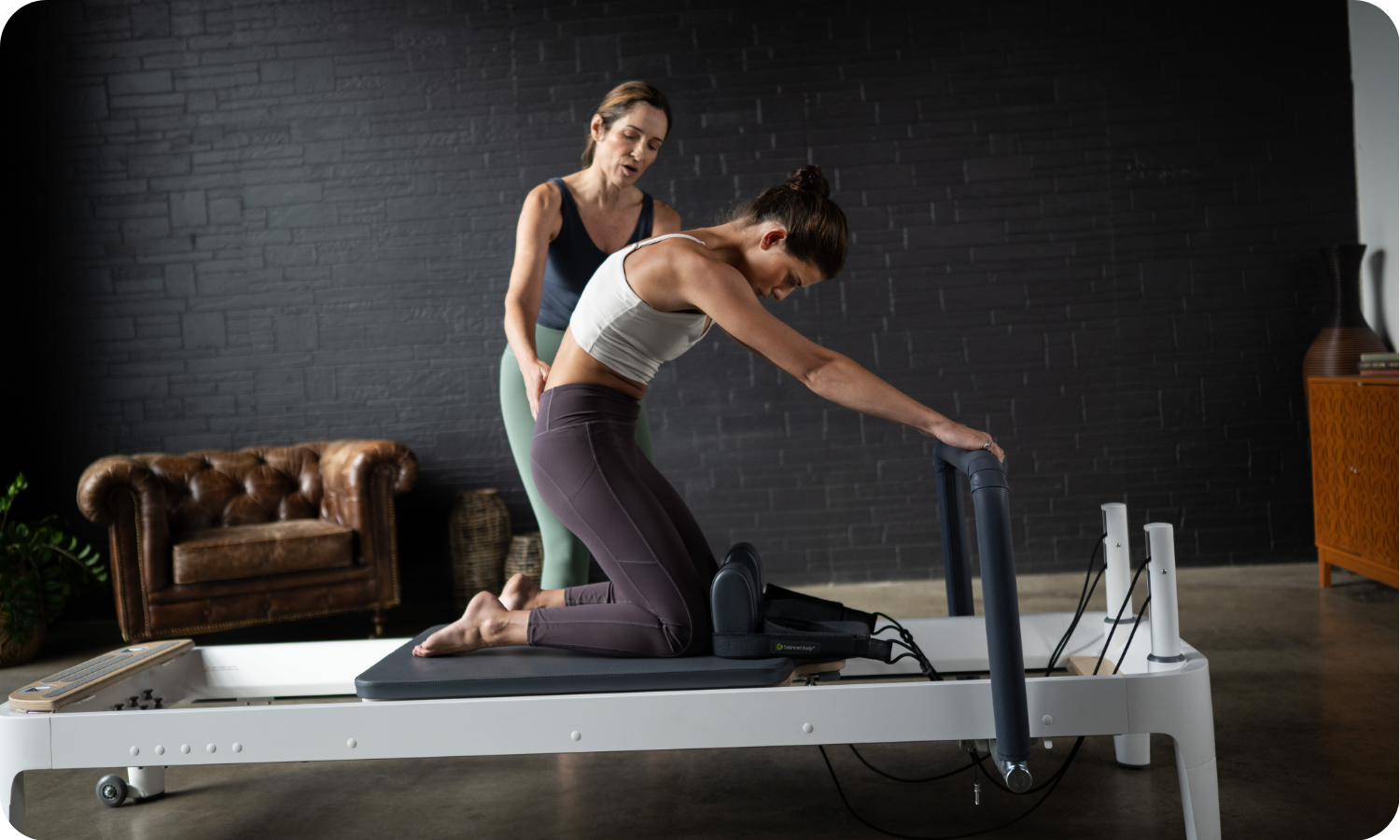
Strain on the neck and shoulders
Many Pilates exercises require stable core control. However, beginners often compensate for a lack of strength by using their neck or shoulders.
This quickly leads to muscle tension—a common problem, especially during exercises performed on your back with your upper body raised.
Common mistake:
- Hunched shoulders
- Tension in the neck instead of the core
- "Pulling" sensation in the head during abdominal exercises
Here's how to do it right:
- Actively pull your shoulders down and back
- Maintain length in the neck (“head floats”)
- Initiate movement from the core, not from the head
Moving too fast instead of moving in a controlled manner
In a world where many forms of exercise focus on speed and intensity, beginners often find it difficult to grasp the principle of controlled movement.
Pilates thrives on precision and mindful execution—not speed.
Common mistake:
- Fast, uncontrolled movements
- “Go through the exercise” instead of feeling it
- Momentum instead of muscle control
Here's how to do it right:
- Perform movements slowly and deliberately
- Control every phase of the exercise (including the return movement!)
- Prioritize quality over quantity
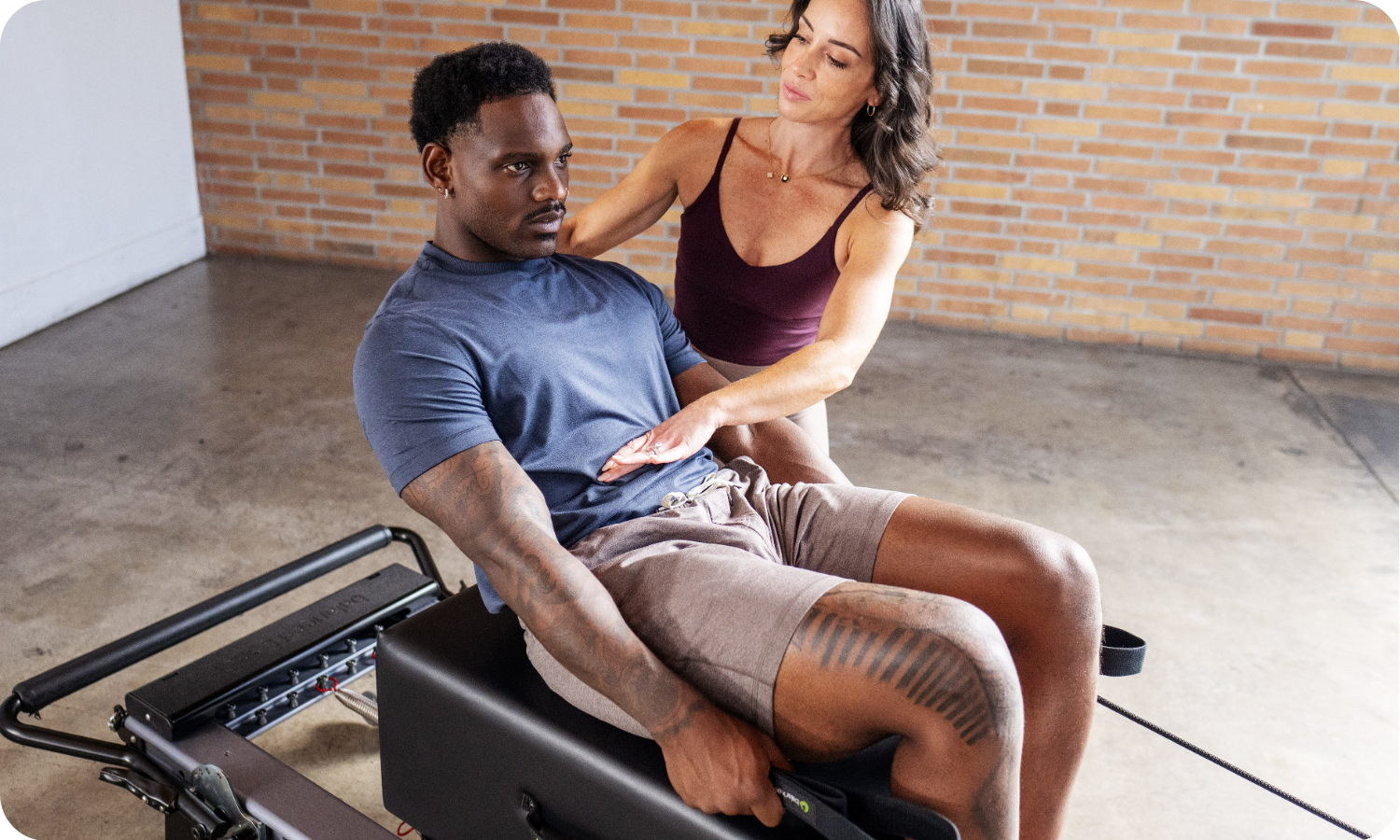
Lack of activation of the deep muscles
A key component of Pilates is the activation of the so-called “powerhouse” muscles—specifically the pelvic floor, the transverse abdominis, and the deep back muscles. Beginners often have difficulty engaging these muscles specifically.
Common mistake:
- Training that is "only superficial"
- The abdomen is pushed outward instead of being engaged inward
- Lack of connection between breathing and the core
Here's how to do it right:
- Gently pull your belly button in and up
- Engage your pelvic floor (“Lift up”)
- Maintain tension without tensing up
Poor body alignment
A proper starting position is crucial in Pilates.
Even minor misalignments can significantly affect how the exercise is performed.
Common mistake:
- Swayback or hunched back
- Uncontrolled pelvic tilt
- Uneven weight distribution (e.g., more weight on one side)
Here's how to do it right:
- Assume a neutral spinal position
- Align the pelvis consciously
- Recognizing and Correcting Body Symmetry
Unrealistic expectations and feeling overwhelmed
Many beginners underestimate Pilates—or overestimate their own abilities. This quickly leads to feeling overwhelmed and
frustration.
Common mistake:
- Exercises that are too difficult too soon
- Focus on "perfect execution" rather than the learning process
- Ignoring the body's signals
Here's how to do it right:
- Start with basic exercises
- Build progress step by step
- Listen to your body
Conclusion
Pilates is much more than a traditional workout. It is a practice for both body and mind that requires precision, control, and mindfulness. By recognizing and consciously avoiding common beginner mistakes, you lay the foundation for an effective and sustainable practice. Especially in a therapeutic context, proper form plays a crucial role—both for prevention and rehabilitation.
The most important thing last:
Don’t aim for perfection—focus on learning.